Access issues for Bermondsey garden maintenance in narrow mews
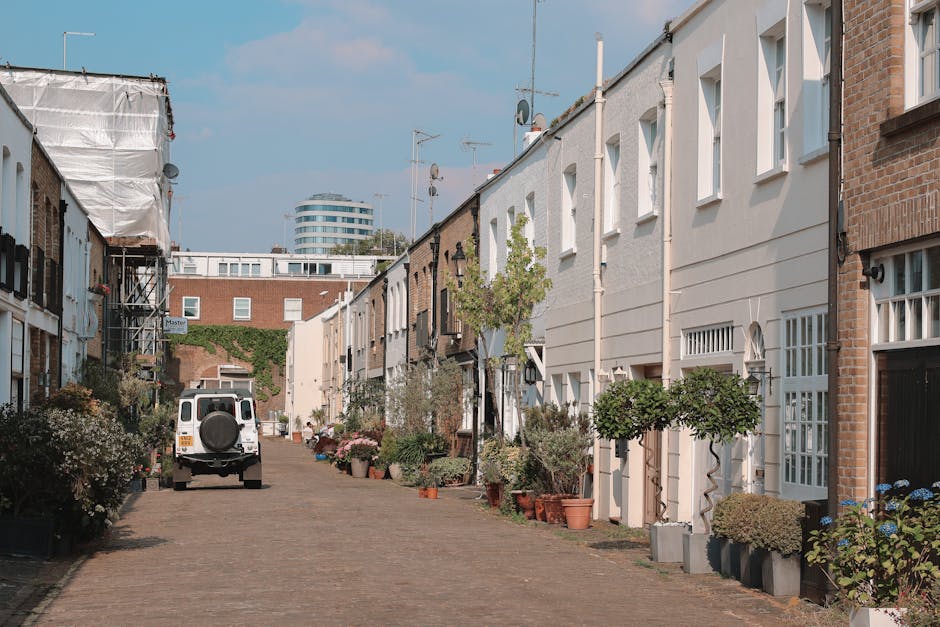
If you live in a Bermondsey mews, you already know the pattern: the garden may look simple from the street, but getting tools, waste bags, a mower, or even a wheelbarrow through the access route can be the real job. Tight gates, shared passages, awkward corners, parked vehicles, basement steps, and neighbours who also need to squeeze past all add friction. That is why Access issues for Bermondsey garden maintenance in narrow mews deserve proper planning, not just a quick "we'll manage somehow" on the day.
This guide explains what typically goes wrong, how a good maintenance visit is organised, what practical checks make life easier, and which services are usually more suitable when access is restricted. It is written for people who want their garden looked after without the usual palaver. Let's face it, no one wants a tidy border and a muddy hallway.
Why access in narrow mews matters
In a wide suburban garden, access is usually a minor detail. In a Bermondsey mews, it can determine what can be done, how long it takes, and how many people are needed. A narrow side passage or shared courtyard can slow down every part of the visit: unloading equipment, moving clippings, trimming hedges, collecting waste, and getting everything back out again without damaging walls, paving, or planting.
That matters for three reasons. First, it affects safety. A cramped route means more lifting, more turning, and more chance of slips or knocks. Second, it affects efficiency. A task that would be straightforward elsewhere may take longer if every tool has to be carried by hand. Third, it affects results. If a crew cannot bring the right kit in, the work may be done with smaller tools, which is fine sometimes, but not always ideal.
There is also the neighbour factor. Mews properties often share boundaries or access points. One misplaced bag of green waste can block a hallway, and one noisy early-morning trolley can ruffle feathers. A careful approach avoids all of that. In our experience, the best outcomes come when access is treated as part of the job, not an afterthought.
If you are comparing broader service options, the services overview is a sensible place to understand how maintenance, clearance, mowing, hedge work, and landscaping fit together.
How access planning works
Good access planning is mostly common sense, but it is the kind of common sense that saves a surprising amount of trouble. The process usually starts before anyone arrives on site. A gardener or landscaper will want to know how they can reach the garden, where equipment can be staged, whether there is enough width for a mower or barrow, and whether waste can leave the site in one go or needs to be bagged and moved in stages.
For narrow mews gardens, the work often begins with a simple assessment:
- How wide is the access route at its narrowest point?
- Are there steps, tight turns, or low head-height points?
- Can equipment be carried safely, or does it need to be wheeled?
- Is the surface delicate, slippery, uneven, or newly paved?
- Will any gates, locks, or shared entries need arranging in advance?
Once those details are clear, the maintenance plan can be matched to the site. For example, a long hedge cut in a mews may be better handled with compact tools and frequent waste removal, while a small lawn might be better serviced with a lightweight mower rather than a larger machine. The point is not to overcomplicate things. It is to avoid arriving with the wrong setup and having to improvise in a tiny corridor with a hedge trimmer in one hand and a compost bag under the other arm. Not fun.
Where the access route is the main challenge, services such as garden maintenance and lawn mowing are often scheduled around smaller tools, shorter turnaround times, and more careful waste handling.
Key benefits and practical advantages
Dealing with access properly is not just about avoiding problems. Done well, it makes the whole job feel calmer and more professional. The garden is tidied more efficiently, the property is respected, and everyone knows what to expect. That can be a relief in a neighbourhood where space is already at a premium.
Here are the main benefits:
- Less disruption: careful timing and compact equipment reduce fuss for residents and neighbours.
- Better safety: fewer unnecessary carries and fewer awkward manoeuvres lower the risk of accidents.
- Cleaner finishes: controlled waste removal keeps paths, steps, and shared areas tidier.
- More accurate quoting: once access is understood, estimates are usually more realistic.
- More suitable methods: the work can be tailored to the space instead of forcing a one-size-fits-all approach.
There is also a subtler advantage: trust. When a contractor asks sensible questions about gate width, storage space, or neighbour access, it tells you they are thinking properly. That is usually a good sign. A vague promise to "sort it on the day" is less reassuring, to be fair.
For larger outdoor redesigns where access can affect material delivery and waste removal, it helps to look at landscaping and landscape gardening as part of a wider plan rather than isolated tasks.
Who this is for and when it makes sense
This topic is especially relevant if your garden sits behind a narrow mews, a shared lane, a basement lightwell, or a rear courtyard reached by a slim side passage. It also matters if the property has fragile paving, steep steps, or access only through the house, because that changes the risk and the logistics. Even a modest job can become fiddly when everything has to pass through a tight channel.
You will benefit most from thinking about access in advance if you are:
- a homeowner trying to keep a compact city garden manageable;
- a landlord arranging regular upkeep between tenancies;
- a managing agent balancing practical work with shared access rules;
- a resident with limited mobility who needs predictable, low-disruption visits;
- someone planning clearance, hedge work, or seasonal maintenance in a cramped space.
It makes sense whenever the garden needs more than a casual tidy-up. If you are just deadheading a few pots, access may barely matter. But if there is hedge trimming, pruning, waste removal, or repeated visits, then the layout becomes central to the job.
For more involved overgrowth or a site that has been left for too long, garden clearance can be the better starting point before routine maintenance resumes.
Step-by-step guidance
Here is a practical way to handle access issues without overthinking it. Simple, but it works.
- Measure the route. Check the narrowest point, doorway width, steps, and any awkward corners. If a mower or wheelbarrow will not pass comfortably, assume it will be a problem on the day.
- Identify pinch points. Look for shared gates, low brick walls, loose paving, slippery patches, and bins or bikes that could block movement.
- Decide what can be carried in. Some tools can be hand-carried safely. Others are better swapped for lighter alternatives.
- Plan waste movement early. Green waste is the big one. If it cannot be moved easily, the whole job slows down. Bagging in stages can help.
- Set a sensible time window. A short, quiet visit may suit the street better than a long, noisy one. Morning works for some properties; mid-day is better for others.
- Protect surfaces and edges. Boards, mats, or careful route selection can prevent scuffs on paving, paint, or timber.
- Keep the scope realistic. If access is very tight, the first visit may focus on what can be done safely and neatly rather than trying to do everything at once.
A useful rule of thumb: if the route feels awkward for a person carrying a full watering can, it will probably be awkward for equipment too. Slightly silly, but it saves trouble.
When the work involves taller growth or awkward overhangs, it may also be sensible to review hedge trimming or tree lopping and removal in light of how branches can be moved through the property.
Expert tips for better results
A few small choices make a big difference in narrow mews settings. Most of them are boring, which is exactly why they work.
- Use compact, modular equipment. Smaller tools are easier to carry, turn, and store while the work is in progress.
- Break the job into stages. Clear, cut, collect, and remove in sections rather than leaving a mountain of material for the end.
- Talk about access before the visit. Photos help, but a clear written description of widths, steps, and entry points helps too.
- Protect the shared route. If the passage is part of a neighbour's daily life, keep it neat and unobstructed.
- Choose tasks that suit the site. Sometimes a lighter maintenance routine is more effective than trying to force a heavy-duty setup into a narrow space.
Here is the part people often miss: access planning is not just physical, it is social. If the work takes place in a shared mews, a quick heads-up to nearby residents can prevent awkward moments. Nobody likes being surprised by the sound of a hedge trimmer at 8:00 in the morning. Well, almost nobody.
If you are weighing up service reliability and how the team handles site conditions, the about us page is worth a look for a better sense of how the business approaches practical work.
Common mistakes to avoid
Most access problems are preventable. The issue is usually not that people ignore them completely; it is that they underestimate them. A narrow mews can look generous until you try moving a trimmer, a mower, and six sacks of clippings through it.
- Assuming the standard kit will fit. It often will not, or it will fit only after a bit of wrestling.
- Leaving waste handling until the end. That is how tidy jobs become messy exits.
- Forgetting about neighbours and shared routes. Access is about people as much as property.
- Overlooking surface protection. One heavy wheel on soft paving can cause avoidable marks.
- Booking without a clear access description. The team may arrive ready to work, but not ready for the route.
- Trying to do too much in one visit. In tight spaces, too much ambition can create more disruption than progress.
The biggest mistake, honestly, is pretending access is minor. It is not. Not in a mews. Once you accept that, everything gets easier to plan.
Tools, resources and recommendations
You do not need specialist jargon to make a good decision. What you do need is a realistic sense of what is possible inside a restricted space. The best approach usually combines smaller tools, sensible handling, and good communication.
Useful things to think about include:
- Compact hand tools: good for detail work where larger machines would be awkward.
- Lightweight mowers or trimmers: helpful where carrying capacity and turning space are limited.
- Sturdy bags or containers for clippings: better than loose piles on narrow paths.
- Protective coverings: useful for routes that pass over delicate paving or through tight internal spaces.
- Clear site notes: written access instructions can prevent confusion on arrival.
For ongoing outdoor upkeep, regular lawn mowing and scheduled garden maintenance tend to be easier to manage than letting the space go wild and then trying to sort it all in one heroic weekend. Heroic weekends sound good in theory. Less good in reality.
If sustainability matters to you, it is also worth understanding how clippings and debris are handled. The page on recycling and sustainability gives a useful steer on responsible waste thinking.
Law, compliance and best practice
For most homeowners, this is less about formal law and more about sensible practice. Still, some points matter. Garden maintenance work should be carried out with due care, especially where shared access, trip hazards, sharp tools, or manual handling are involved. In the UK, contractors are generally expected to work safely, communicate clearly, and avoid creating unreasonable risks for residents or visitors.
In a narrow mews, best practice usually means:
- keeping access routes clear wherever possible;
- moving carefully around steps, slopes, and tight corners;
- using appropriate protective measures for floors and surfaces;
- handling waste in a way that avoids blockages or contamination;
- being considerate about noise, timing, and shared entry points.
If the job involves more than routine tidying, it is sensible to ask how the work will be carried out and how safety is managed. The health and safety policy and insurance and safety information are both useful for reassurance before any work begins.
There is also a straightforward customer-service point here: clear terms, clear expectations, and a fair complaints route help everyone. That is why pages like terms and conditions and complaints procedure matter more than people often think.
Options and comparison table
Different access situations call for different methods. The right choice depends on what needs doing, how much room there is, and how often the work will recur.
| Approach | Best for | Pros | Trade-offs |
|---|---|---|---|
| Routine garden maintenance | Small, regularly kept mews gardens | Predictable, easier to schedule, less clutter | May need lighter equipment and more frequent visits |
| Garden clearance | Overgrown spaces or one-off resets | Fast way to regain control of the garden | More waste movement and more access planning needed |
| Hedge trimming and pruning | Tight gardens with boundary growth | Improves light, shape, and usability | Branches and cuttings need safe removal |
| Landscaping or redesign | Sites needing layout changes for better access | Can improve long-term usability | Delivery, storage, and material movement can be complex |
In a mews setting, routine maintenance is often the easiest path if the garden is already under control. Clearance is the better choice when access has been made worse by overgrowth. And if the layout itself is the problem, redesign work may be worth considering so the space becomes genuinely manageable rather than just repeatedly awkward.
Case study or real-world example
A typical Bermondsey mews scenario goes something like this. A small rear garden has a narrow access route through the property, with a gate that opens inward, a short set of steps, and a shared passage beside neighbouring homes. The garden itself is not huge, but the path in and out is the issue. After a few months of growth, the hedge has pushed into the passage, and grass cuttings keep ending up where people walk.
Instead of treating it like a standard suburban visit, the work is split into stages. First, access is cleared and the route is checked. Then the hedge is cut back in manageable sections. Waste is bagged as it goes, not left in one heap. The lawn is dealt with using a smaller mower that can be carried through the route without banging into walls. Finally, the passage is brushed down so no one steps out later and finds a trail of clippings underfoot.
That kind of approach may sound basic, but it makes a massive difference in practice. The client gets a neat result, the neighbours are not inconvenienced for long, and the space feels usable again. Truth be told, the lack of drama is usually the sign of a job well done.
Practical checklist
Use this before booking or starting any work in a narrow mews:
- Measure the narrowest access point and note any low head-height sections.
- Check for steps, slopes, awkward turns, or fragile paving.
- Confirm how gates, keys, or shared entries will be handled.
- Decide where tools and waste can be temporarily staged.
- Identify whether the task is routine maintenance, clearance, pruning, or a larger redesign.
- Ask what equipment will be used and whether it is suitable for tight access.
- Think about noise, timing, and whether neighbours need notice.
- Make sure the route in and out can stay clear during the visit.
- Ask how waste will be removed and whether it can be done in stages.
- Keep a short written note of any access quirks so nothing is forgotten.
Expert summary: In narrow Bermondsey mews gardens, the best maintenance plan is rarely the biggest one. It is the one that fits the route, respects the neighbours, protects surfaces, and keeps the work calm from start to finish.
Conclusion
Access issues in narrow mews gardens are not a side topic. They shape the whole job. Once you understand the route, the pinch points, and the practical limits of the space, garden maintenance becomes more manageable, less disruptive, and usually a lot more predictable. That is good for the garden, good for the property, and good for everyone trying to move through the space without a daily obstacle course.
If your garden needs regular care, a one-off clearance, or a smarter long-term layout, start with the access question first. It is the detail that unlocks the rest. And once it is handled properly, the garden tends to feel a little easier to live with, which is really the whole point.
Get a free quote today and see how much you can save.
Frequently Asked Questions
What are the main access problems in Bermondsey mews gardens?
The most common issues are narrow side passages, shared gates, tight turns, steps, limited storage space, and the difficulty of moving tools and green waste without blocking access for residents or neighbours.
Can garden maintenance still be done if a mower will not fit through the access route?
Yes, often it can. The job may need smaller equipment, hand tools, or a different maintenance method. In some cases, the garden is better serviced in stages so the access route stays usable.
Is garden clearance harder than normal maintenance in a narrow mews?
Usually, yes. Clearance creates more waste and often needs more carrying, more bagging, and more trips through a tight space. It can still be done well, but it needs a more careful plan.
How should I prepare before booking a maintenance visit?
Measure the narrowest parts of the route, clear bins or bikes out of the way, and note any steps, gates, or shared access points. A few photos and a short written description can save a lot of confusion.
Will narrow access make the job more expensive?
It can, depending on how much extra time, handling, or specialised equipment is needed. The fairest approach is to request a quote after the access details are understood, rather than guessing from the garden size alone.
What kind of garden services are most suitable for mews properties?
Routine garden maintenance, lawn mowing, hedge trimming, and smaller clearance jobs are often the most practical. Larger landscaping work may still be possible, but it needs more planning around material movement and delivery access.
Do I need to warn neighbours before work starts?
In shared or very close mews settings, it is often a good idea. Even a brief heads-up about timing can reduce friction, especially if the work may be noisy or if a passage needs to be kept clear for a while.
How can I protect delicate paving or painted surfaces?
Ask for careful route planning, use of protective coverings where needed, and sensible handling of heavy bags or equipment. The aim is to prevent scuffs, chips, and dirty marks on the way in and out.
What if access is through the house rather than the side of the property?
That is still workable, but it changes the approach. Tools may need carrying in carefully, waste may need to be bagged in a controlled way, and floors or hallways may need extra protection during the visit.
Can access issues affect what services I should choose?
Absolutely. If access is very tight, routine maintenance may be a better fit than a heavy clearance or full redesign. If the garden has become overgrown, clearance might be the first step before regular care can resume.
How do I know if a contractor understands narrow mews access properly?
They should ask specific questions about width, steps, shared entries, waste movement, and timing. If they only ask for the garden size, that is usually not enough detail for a mews property.
Where can I find more information about the company's policies and service expectations?
Useful starting points include the accessibility statement, payment and security, and contact details if you want to ask something specific before booking.